Ever rushed to buy something online because it looked like it was about to sell out?
Maybe a banner screamed “Only 1 left in stock!”
or a countdown timer warned that your deal “Ends in 30 minutes”
.
You felt the pressure. You clicked.
But here’s the thing. That urgency? It might’ve been a trick.
Welcome to the world of deceptive patterns. Subtle (and not-so-subtle) design tactics used to push you into actions you didn’t intend to take.
What are Deceptive Patterns?
Deceptive patterns are design choices in websites or apps that intentionally mislead users into doing things they didn’t plan to, like buying something, sharing data, or signing up for a service.
You must probably be doing the Leonardo Dicaprio pointing meme right now or thinking, “Nah, I’m too smart for that.”

But here’s the gag; even the smartest users fall for these tricks. In fact, some of the world’s biggest tech companies have been sued, fined, or publicly called out for using deceptive patterns in their design.
So, what do these sneaky patterns look like in real life?
From guilt-trippy buttons to fake countdowns, these tricks are baked into the apps and websites we use every day and most of us don’t even notice.
Let’s break down a few of the worst offenders.
FOMO Induced Reactions · FAKE SCARCITY
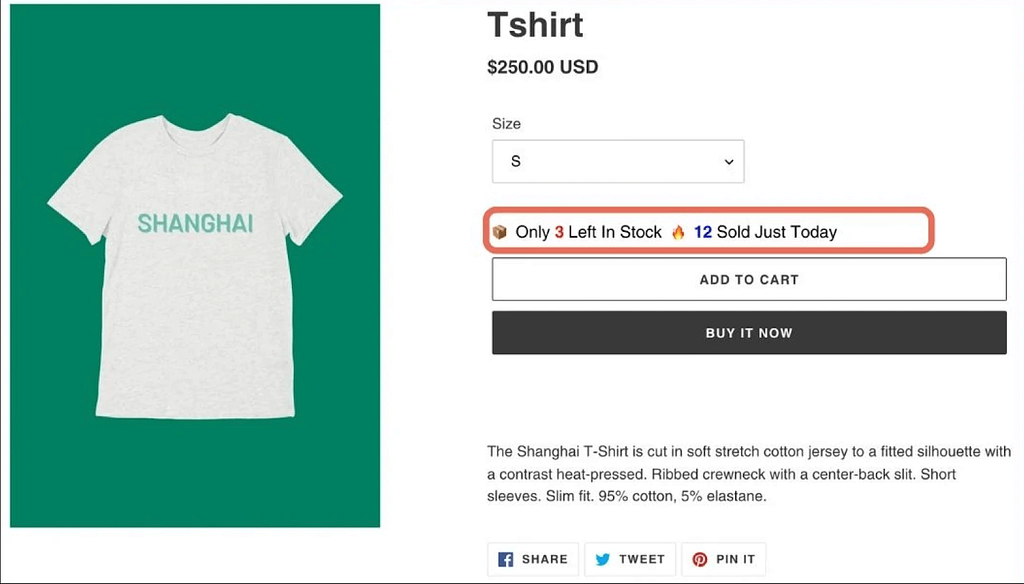
The screenshot above is taken from the fake scarcity entry in the deceptive.design pattern library, reproduced here for criticism and comment.
Remember that panic you felt when a banner screamed “Only 1 left in stock!”
or a countdown timer warned your deal was about to expire?
That wasn’t urgency. It was manipulation.
Fake scarcity is a deceptive pattern where sites pretend that something is in short supply to pressure you into making a rushed decision. It plays directly on our fear of missing out (FOMO) and bypasses rational thinking.
The wild part? There’s usually no scarcity. It’s all smoke and mirrors.
A good case-study is the UK’s Competition and Markets Authority(CMA) investigation of Booking.com in 2019 for misleading scarcity claims.
They showed prompts like “X people are looking at this right now”
or “Only 1 room left!”
even when that wasn’t the case.
From FOMO to Guilt-Trips
If fake scarcity plays on fear, “confirmshaming” plays on shame.
Confirmshaming is when apps or websites guilt-trip users into making a specific choice, usually by turning the “No” option into something awkward or self-deprecating guised under banter or just “silly wording”.
Ever been asked to rate an app and saw a popup like:
“Rate us to support our small team!”
- 👍 Sure!
- 😬 Maybe later
- 😢 I don’t care about indie devs
It’s emotional manipulation, plain and simple.
You wouldn’t guilt-trip someone into a compliment in real life; so why do we let apps do it behind a screen?
404: Escape Not Found · The “Roach Motel” Conundrum

Ever tried cancelling a subscription and felt like you were running through a maze blindfolded? Well, you’re not imagining it. That’s the Roach Motel in action; a deceptive design pattern where getting in is easy, but getting out is a nightmare.
You’re lured in with a free trial or one-click sign-up. But when it’s time to cancel? Suddenly, the “cancel” button is buried under menus, hidden behind logins, or worse, you have to call someone. In 2025.
This isn’t bad design; it’s intentional friction and companies know it works. Most people give up, postpone, or just forget altogether.
And it’s not just shady apps doing this.
- Amazon came under fire in 2022 for making it ridiculously hard to cancel Prime. You had to navigate through multiple misleading pages, each nudging you to stay just to reach the final cancel button. The Norwegian Consumer Council even called it a “manipulative design.”
- Adobe is another major player. Users trying to cancel their Creative Cloud plans often get slapped with unexpected cancellation fees and vague instructions. Not to mention the hoops you have to jump through just to reach the end of the process.
Read article
You might ask, “Why do they keep doing this?” and the answer is simple.
In the cut-throat world of business and “Conversion Rates” platforms throw ethics out of the window.
So, after seeing what’s under the hood, it begs the question:
Are we really using the internet; or is it using us?
Let me know what you think, and stick around for Part Two, where I dive into even more types of deceptive design patterns that fly under the radar.